
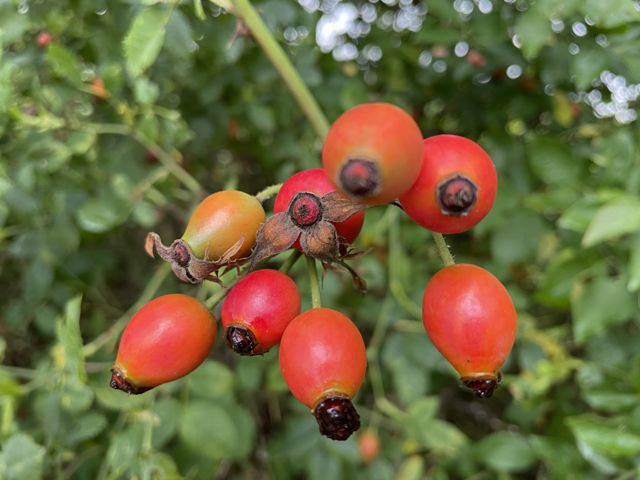
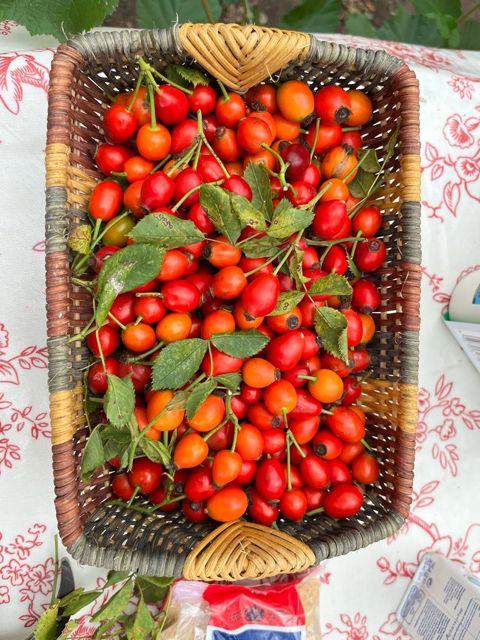
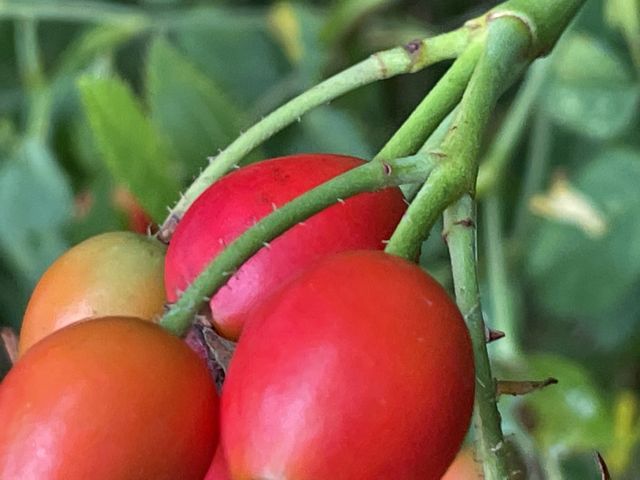
Rosehip, jewels in the hedgerow, was our theme, and while we meandered through the wood, we made Rosehip syrup, a drink from many of our childhoods, and drank it with pleasure.
Here’s our hive mind on Rosehips:
- Dogs like rosehips
- Like jewels
- In the war it was revealed that they were 20 times more vitamin C rich than oranges
- They make an tasty Miojito
- They are benficial for arthritus and infamitory
- My daughter made rosehip oil
- Remember the Flower fairies? There was a Rosehip Fairy
- Rosehip tea of the 60s
- Distant memory of growing up end of the war picking rosehips for the government
- Larger this year than i remember
- Dog rose, a belief that rosehips cured mad dogs
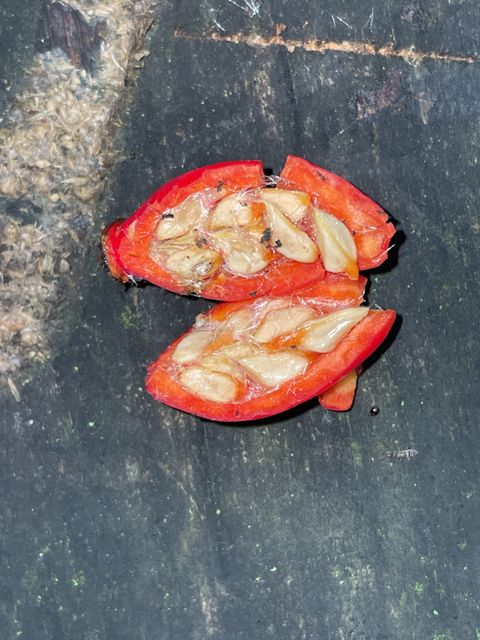
- Hairy seeds that we would put down peoples necks
- Nearly lost life and limb picking them
- My daughter makes facecreams and uses rosehips within them
- Plenny root of rosehip cures rabid dogs
- Fairies eat 3 rosehips and turn 3 times to become invisib
Martin made some rosehip juice, strong to taste and not unpleasant. It does contain pectin so it will thicken up. He told us the story of Barbara Allan, who when she died became a briar.


Fungi foray with Neil
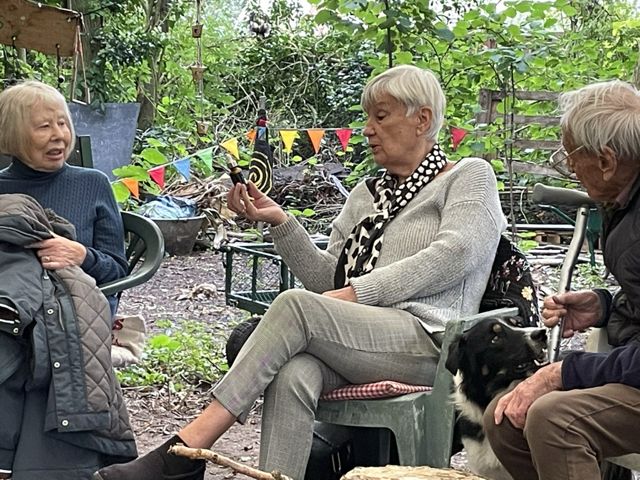
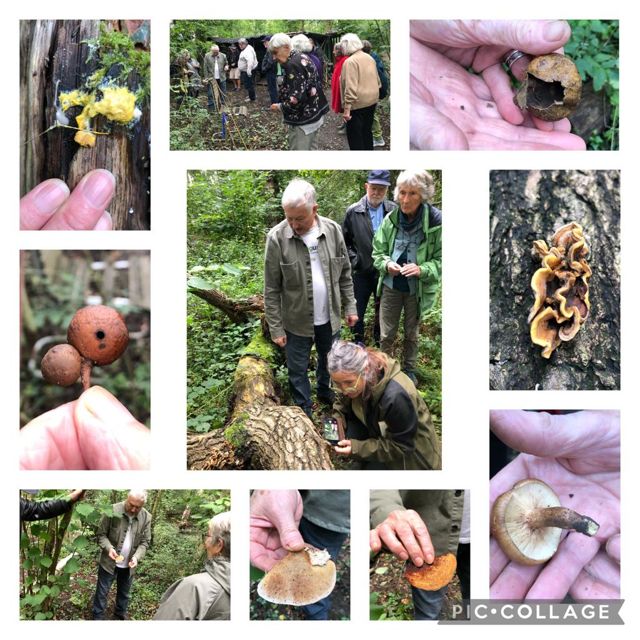
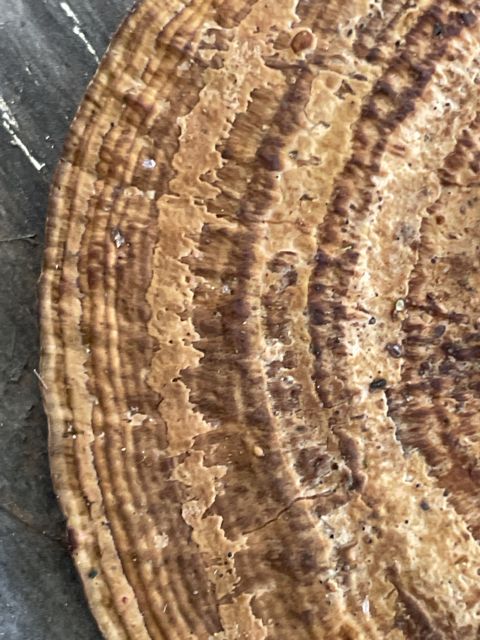
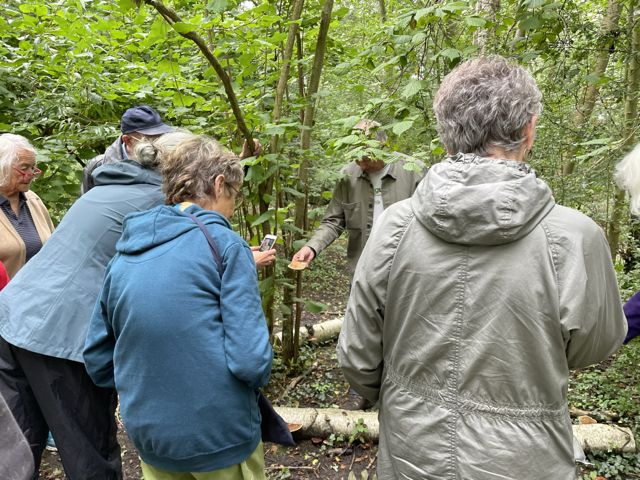
The great Neil Mahler arrived, and took us around the wood, and the world of FUNGI. In fact our talking stick was encrusted with Hairy Curtain Crust, Stereum hirsutum. Looks a bit like cornflakes, found Kally.
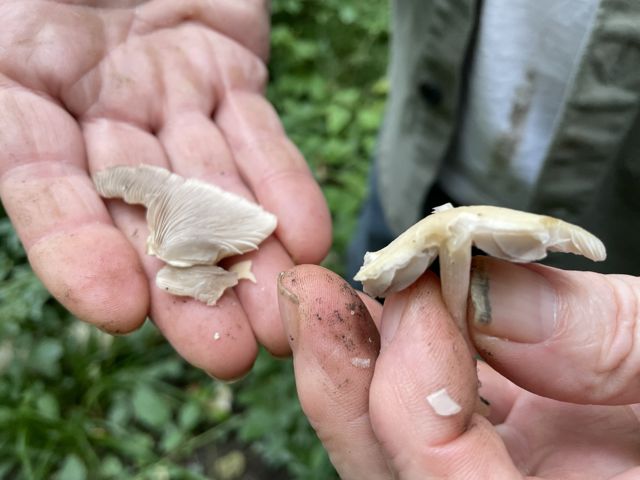
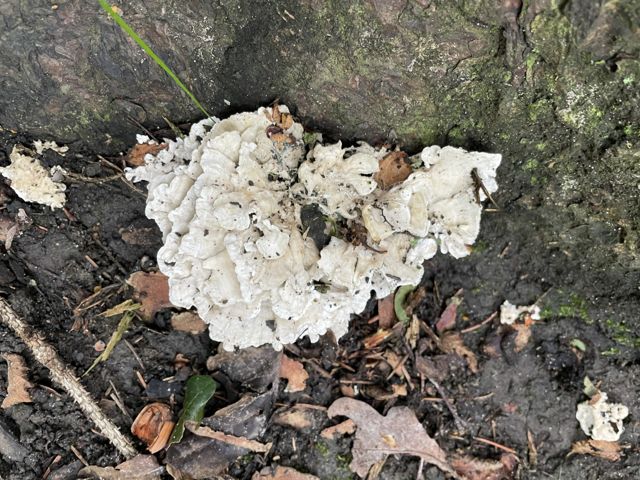
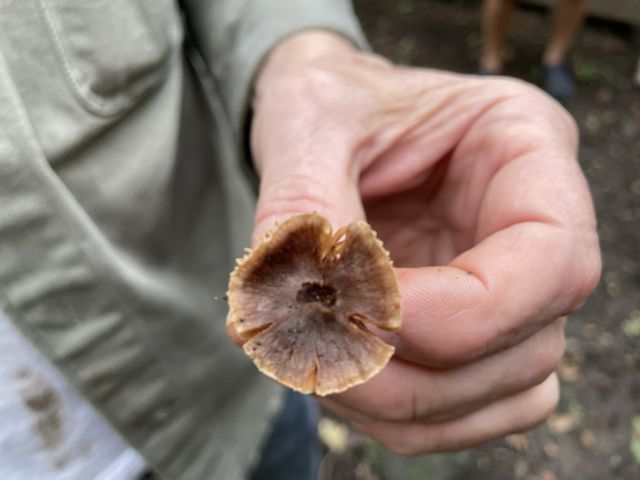
Here is what we found
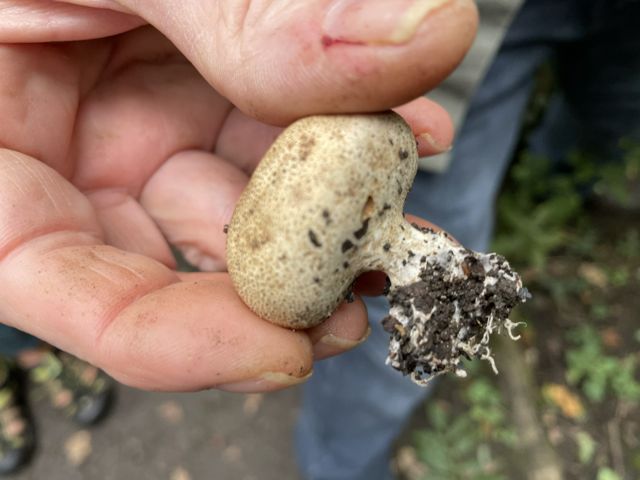
Earth Ball – Scleroderma citrinum – an empty one and a full one
Inocybe Inocybe sindonia
Corsican Pine or Spruce unknown fungi
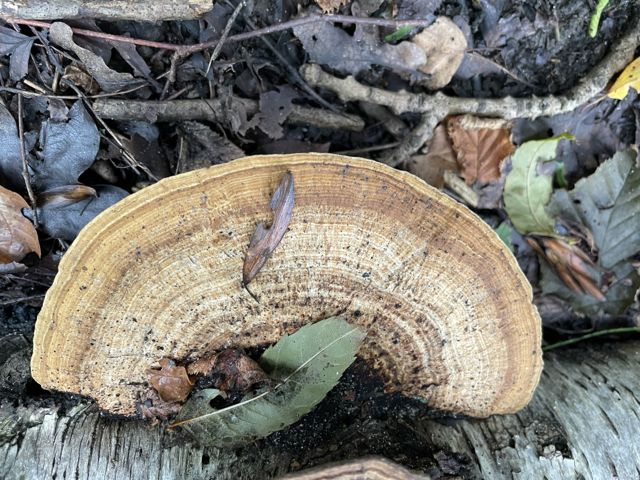
Blushing Bracket Daedaleopsis confragosa on Birch
Birch Polypore Fomitopsis betulina
Barbers used to ‘strop’ or sharpen their cut-throat razors on tough, leathery strips cut from the surfaces of these polypores, and so they became known as the Razor Strop Fungus. The 5,000 year old mummy found in the Tyrol and nicknamed Ötzi the Iceman was had two pieces of this fungus on a neck thong, and it seems unlikely that their purpose was to sharpen a razor. The Birch Polypore was also used by early Man with some kind of spark producing implement such as flint stones to start camp fires at a new campsite. The polypore was used in dried form to carry fire from place to place, because they smoulder very slowly while being transported and can then be fanned into flames upon arrival at a new location – a great help in the days before matches or gas lighters.
https://www.first-nature.com/fungi/piptoporus-betulinus.php
Hairy Curtain Bracket Sterium Hersutum
Rustgill – Gymnopilus penetrans (sticky)
Common Stump Brittlestem – Psathyrella piluliformis
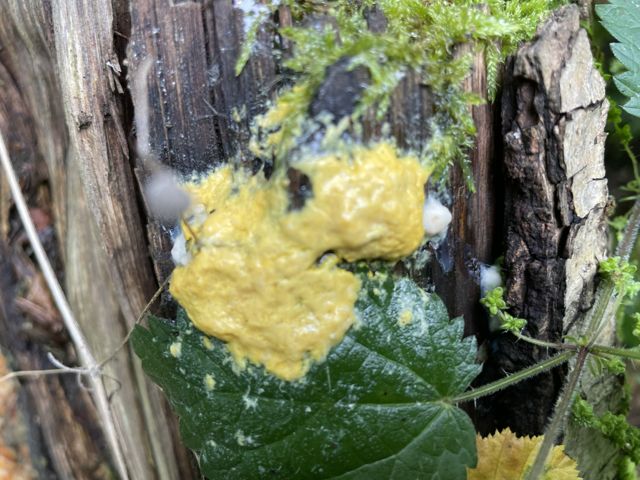
Slime Mold – Fuligo septica AKA scrambled egg They are ‘intelligent‘ Not a fungi. Fuligo is a widespread genus of plasmodial slime mold in the family Physaraceae. These organisms are protozoans rather than fungi, but for historical reasons are sometimes treated as part of mycology. So part of the 4th Kingdom
Neil and I struggled with the Kingdoms – here they are: Living things are divided into five kingdoms: animal, plant, fungi, protist and monera.
Fungi used for dyeing:
Cortinarius rubellus Cooke – Deadly Webcap
Phaeolus schweinitzii (Fr.) Pat. – Dyer’s Mazegill
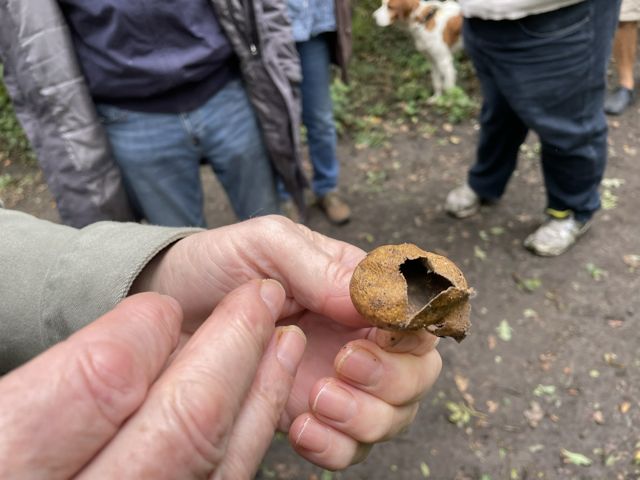

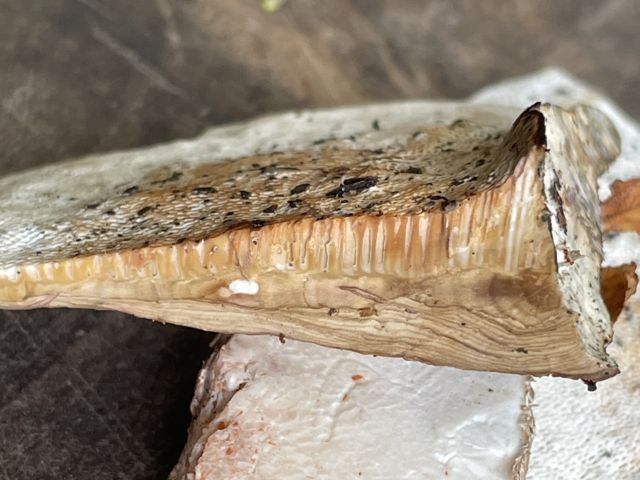

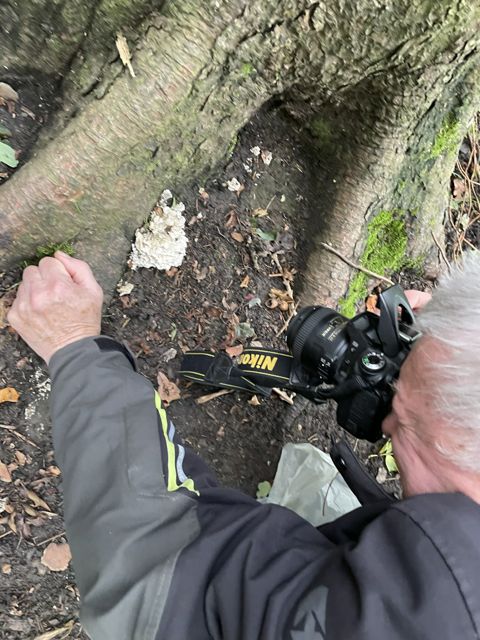
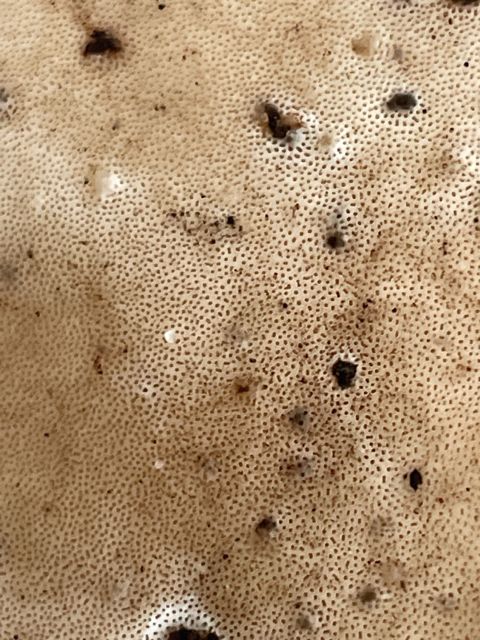








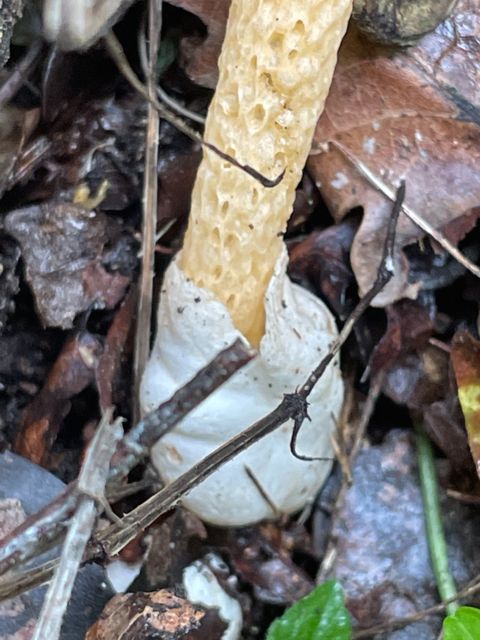
And the piece de resistance….. Mutinus caninus Dog Stinkhorn.
A happy family of them just beside our front gate, well spotted by Neil with his eagle eyes. Virginia tested the stinking quality – more earthy than stinky she said.



Preparing for Dyeing
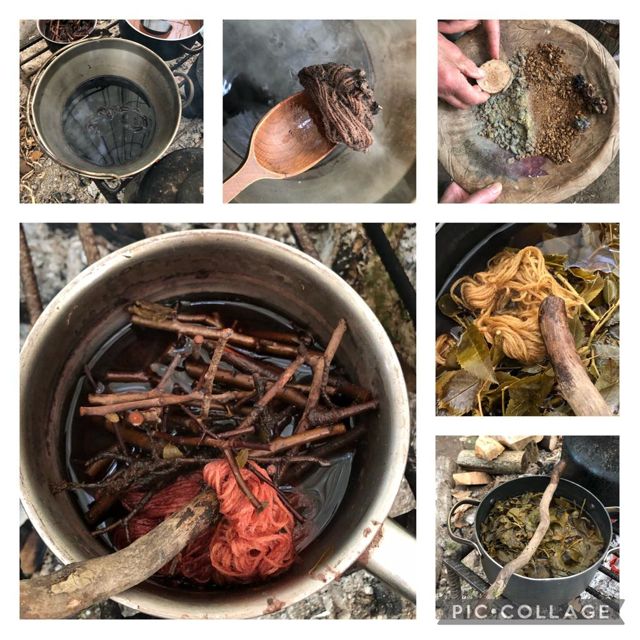
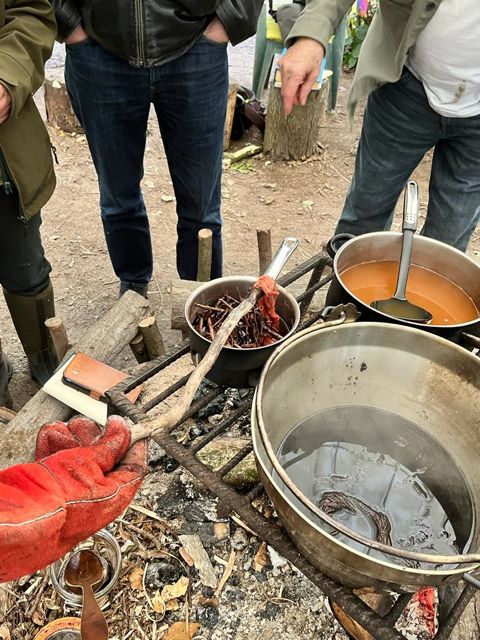
Last week several elders said they would like to weave, so we discussed doing some natural dyeing again. All the team had a hand in gathering and steeping various dye stuff to go into the pots over the fire. Rachel, like an alchemist ink manucatuer, had been grinding oak knopper galls and soaking them for a few weeks to make ink, so she donated a jar of the darkest brown liquid. After last weeks session Kally cut some hawthorn twigs from around kaliwood and soaked and simmered them obtaining a bright orange shade of dye. Lesley pruned her dog rose for both the hips and the leaves, she soaked the leaves for a few nights and donated us the saucepan they were within. And Nicky once rosehip syrup was brewed, gave us the strained pulp so we could experiment and try and get a colour for next session. We placed a few sample skeins of merino yarn into each pot alongside the simmering plant stuff and by the end of the session there was warm shades of brown, yellow and orange, though we kept them under the liquid til next week to see if the tone had deepened.
Our Elders Book
Gill had decorated the front of our Elders book – with beautiful blackberries. Here it is

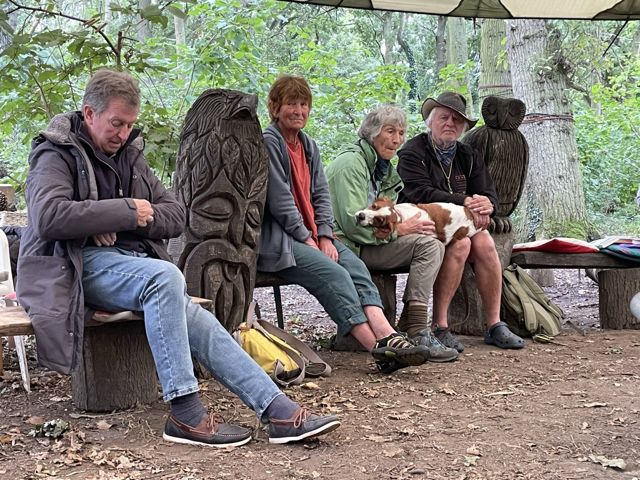
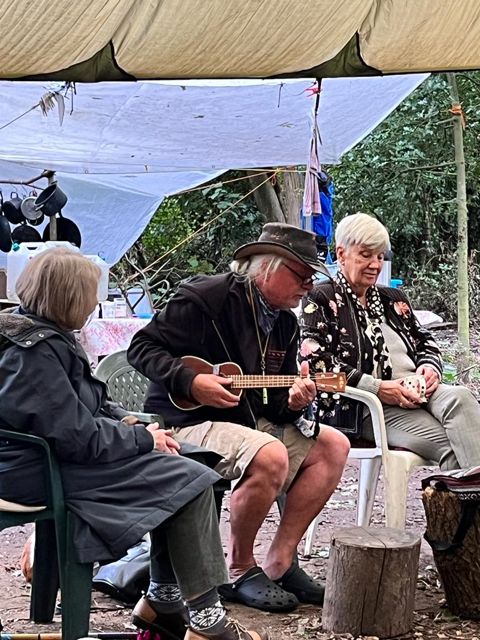
Back at base camp, we supped Rosehip juice, ate our scones, and listened to the ballad of Barbara Alan sung magnificently by Martin.
 Kinda Elders in the woods