
Our homework being tannns here’s what we gathered, enlivened by tasting tannins in a sip of red wine (Sicilian, Lidle £5 a bottle a bargain)
- Tannins act like a skeleton, giving the wine its structure and a more robust feel.
- Tannin cuts through the intense meaty protein of a dry-aged fat-marbled steak, permitting subtler flavors of both wine and food to emerge. The tannin molecules bind to proteins and other organic compounds in the food and scrape them from your tongue.
‘Andrew how did you find it?
‘It was in a cup’
Blackberry, chewy, cleans the tongue, scouring, astringent, pungent, stinging, sticky, dry, dislike.
- Tannins in tanneries.
- Aging oxydisation
- sloe skins in cynotype printing
- Tannins in oak galls for ink



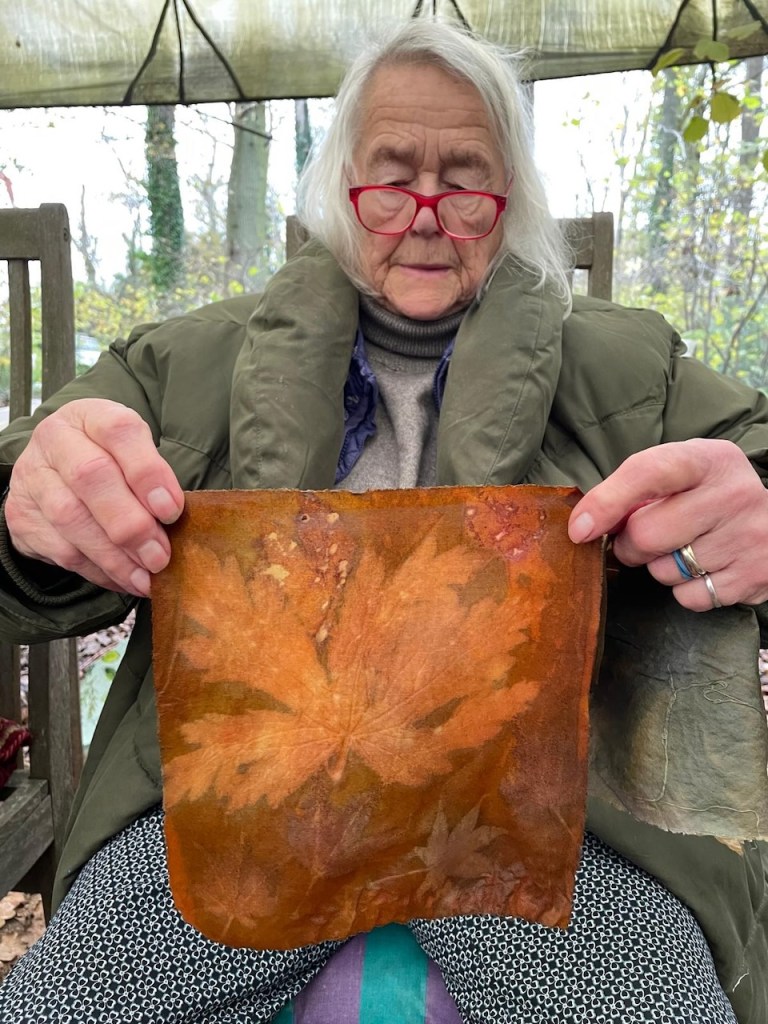
Eco-printing
Kally bought with her examples of different materials, and different dyes for eco-printing. One in particular, SLUB SILK, was particularly effective at taking the form of the leaf. (See the scrubby silk scarf on eagle below). A few of us made one eco-print mummy which we steamed over the fire to be revealed next week.


Planting of Black Poplar
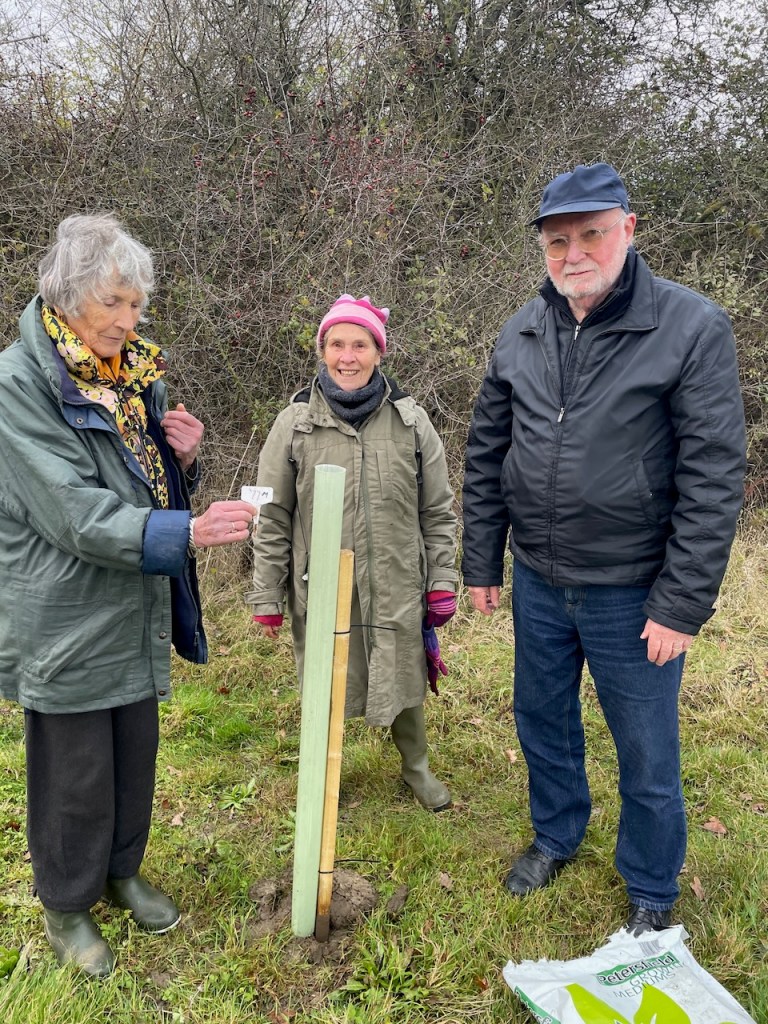
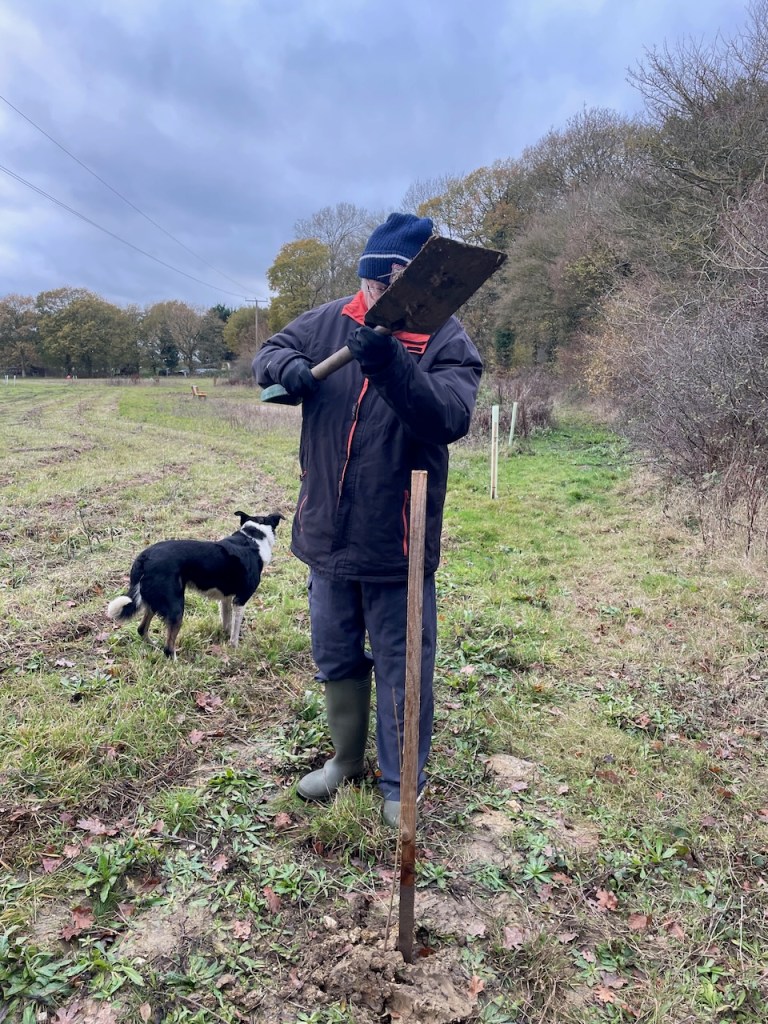
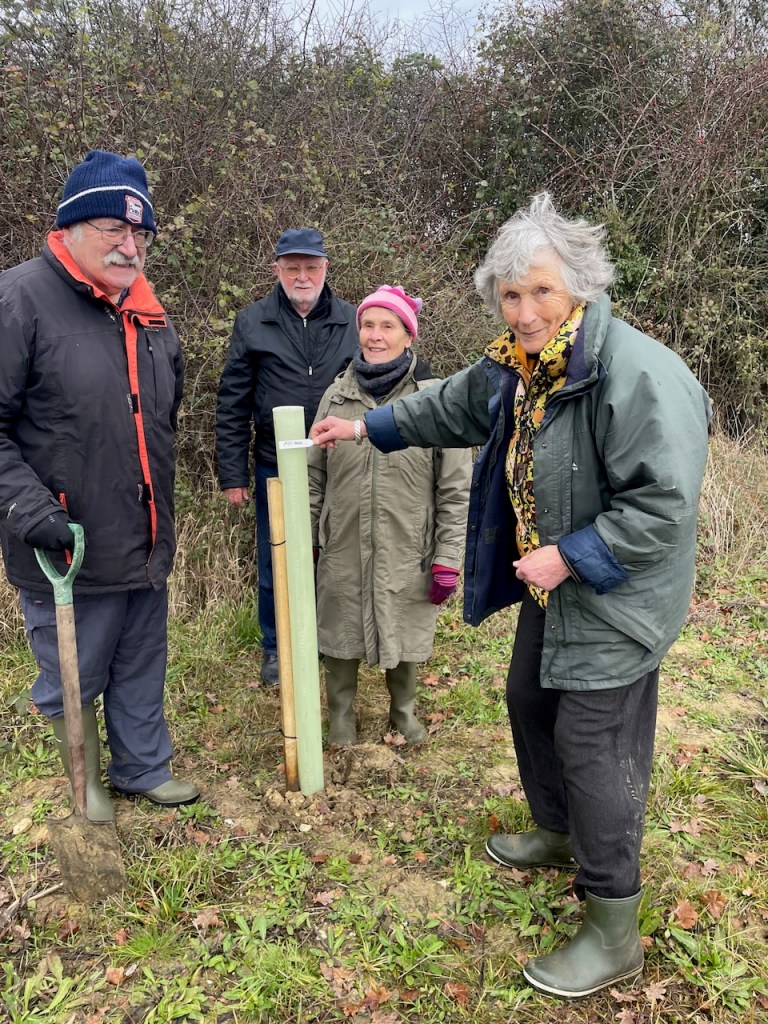
After admiring the fullness of our pond, and regretting we had not put a measuring stick in, we planted 2 black poplar into the willing clay soil. According of the Suffolk Tree Wardens, David Appleton, project:
These beautiful trees have been reducing in number over the years, due to habitat degradation (they love wet grounds like flood plains, riverbanks and ponds, which have been hit by highly effective drainage of the land), introduction of hybrid poplars viewed as more commercially lucrative and felling of veteran trees. The black poplar readily hybridises with other poplar species, depleting its numbers further still.
However, according to David Appleton Suffolk Black Poplar Project Leader and a Tree Warden with the Suffolk Tree Warden Network, word is now spreading of the importance of the native black poplar and therefore its value to our countryside.
So we planted 2 native black polar, took photographs, logged What 3 Words, and have reported back to the base.

Catching Roger
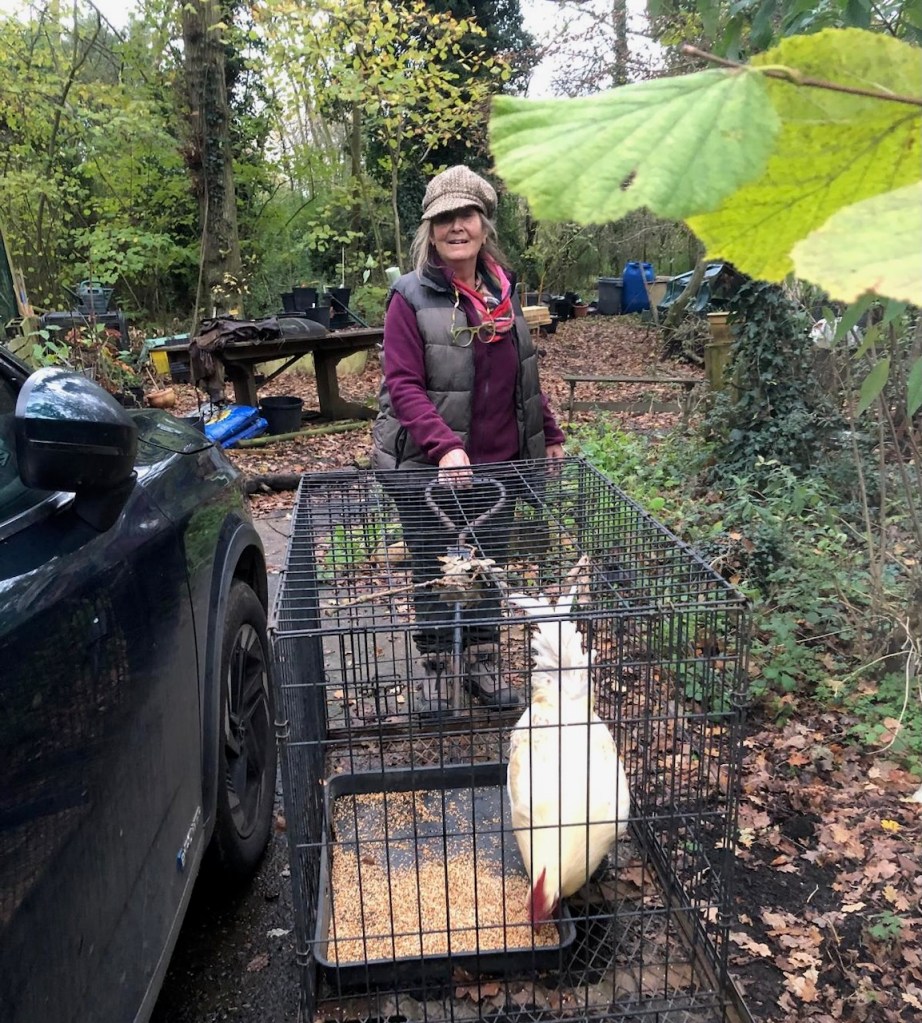
Our final task of the day was to catch Roger – to protect him from possible life treat by some visiting hunters (dogs). Tempting him with grain and corralling around him, with Peters swift action, we put him into a dog cage and wheeled him to Clive where he resided for that night.



Homework: Bring in a leaf and Left and right brain
 Kinda Elders in the woods