
Alice Eastaugh writes:
We spent 3 days in Worlingham woods with the impassioned FS leader, Jon Cree. Reframing Stressed Behaviour in the outdoors – our own, and those we work with.
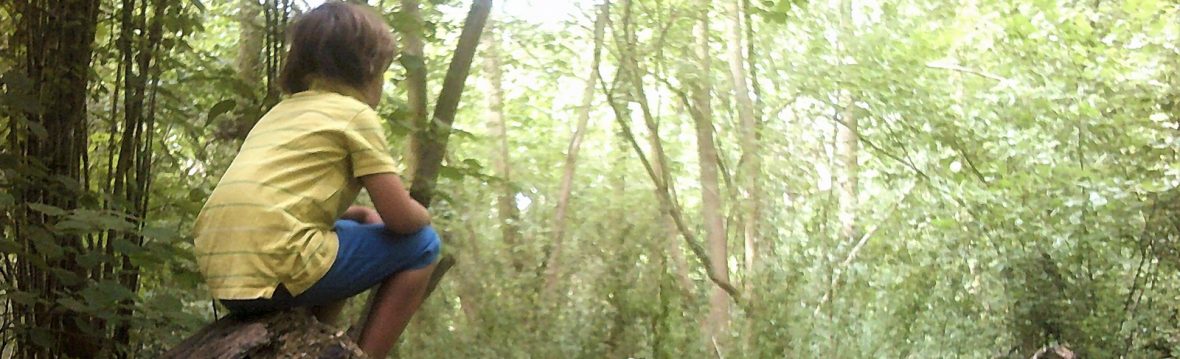
Worlingham woods, a huge 30 acre area once belonging to Worlingham Hall before the Beccles bypass divided the land. (Modernisation truncating old land). Down Marsh Lane, past the site of stone age re-enactment scenes, into the woods, and turn left at the 600+ old chestnut tree to find our fire hearth, the centre of our learning for the 2 golden autumnal days, before rain lashed on Friday and forced us into the cabin.
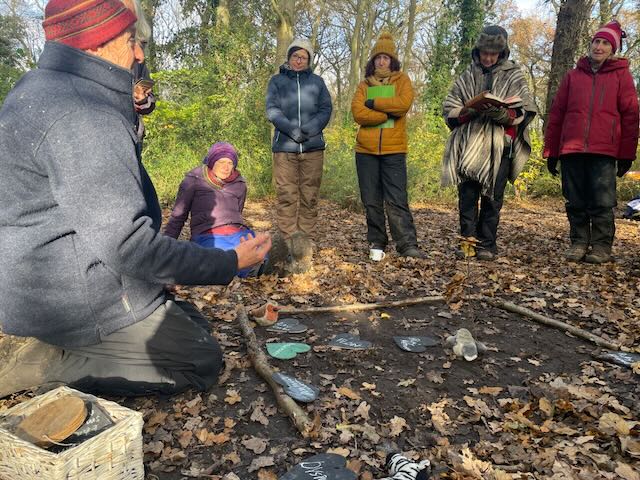
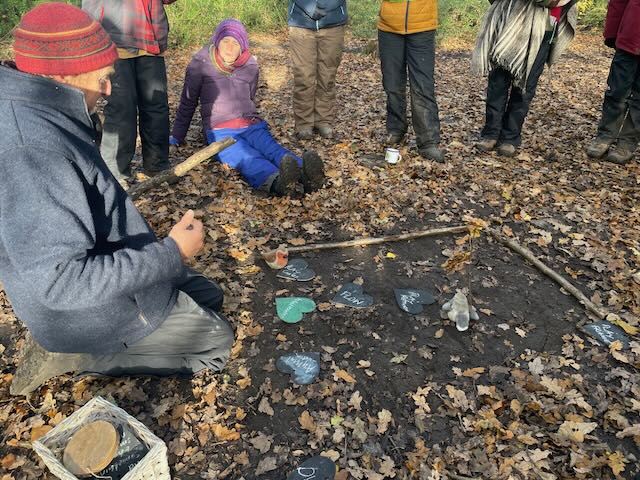
Here we learnt that our brains are chiefly there to look after our bodies, so ignore the messages of the body at your peril. The importance of somatic noticing, feeling into what is going on for you, without words having to be too precise eg ‘have you got squiggles going on in your tummy?’, ‘I notice you are breathing very fast…that’s making me feel a bit jumpy….shall we do a breath game together to slow it down?’ Knowing that people cannot find words, or control themselves when they are in a very heightened state. Learning this first hand from the story Jon told about 2 boys crafting some stools, and the one who lost it totally with his friend…we were on tenterhooks to know why…but had to wait at least 24 hours for the end of the story! Meanwhile we role-played him and his friend and 2 observers. Such deep learning. Of course you can’t hear instructions or questions when you are mad… of course it needs time and just ‘sitting beside’ and sometimes gentle mirroring until some sort of regulation is achieved, or words can be found to help. As the FS leader in my little roleplay group, I learnt the need for time, holding space, not getting too close but being there for the heightened person in a non-judgemental, observing state, with no interrogation. People need time to process; and the first thing to aim for is to resonate with them, then relate, then reason when they can hear it. Problem solving may come or not, but maybe much later. The acronym TELL is helpful in this sort of crisis intervention: timing (eg are they hungry?), environment/place (where did it happen?), look, listen and LEARN!
We learnt something most of us probably knew already: there is no such thing as bad behaviour, only behaviour that reflects what is going on as an internal response to external factors. These factors may be current, or in the past and can manifest in so many different ways. We looked at our fundamental needs and thought about children and erstwhile labels of them: attention-seekers are craving connection, anger needs letting out safely not closing down, sadness needs washing out not bottling up. Kids can be shamed for their neuro-divergence, often many times in their life and this shame can stick in a toxic way.
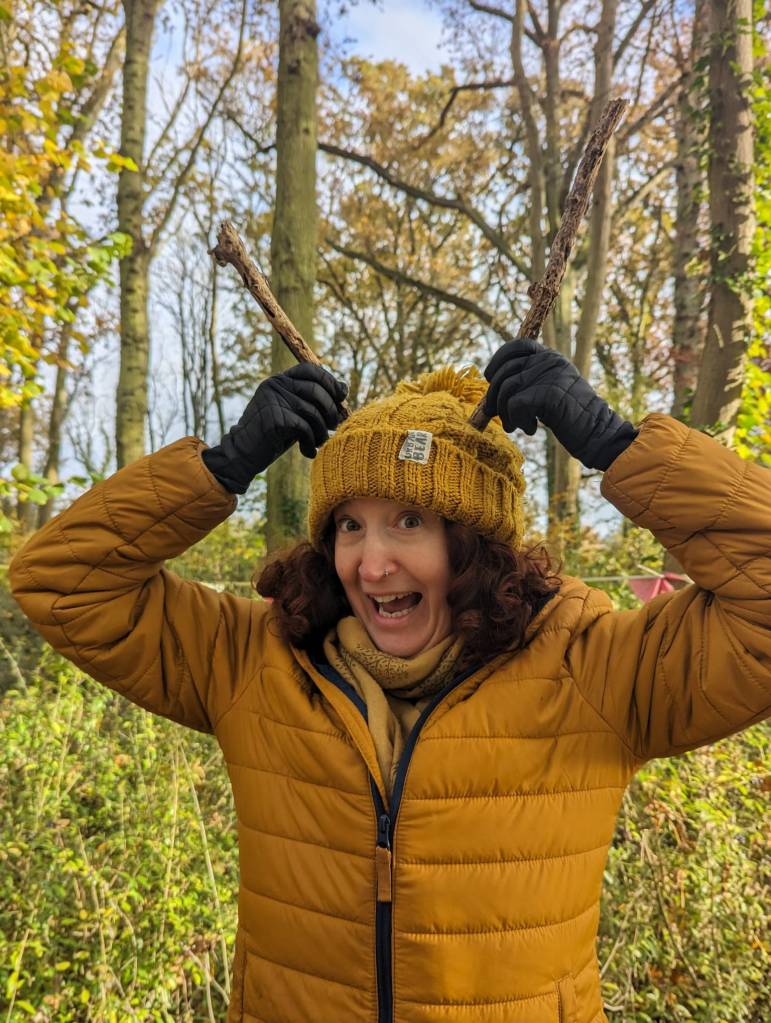
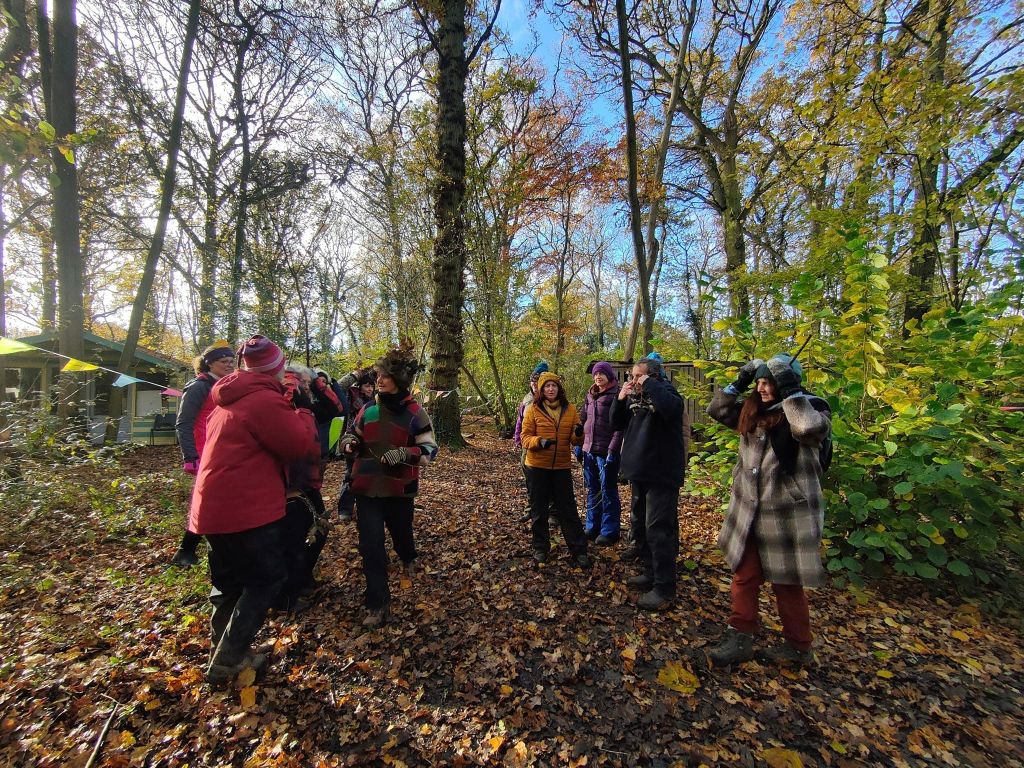
Learning was not all serious – oh no! We did the most joyous stick play with another person which was at the same time funny and calming…another form of regulation. We swung high on the best woodland swing ever and knew that moment of fear, which tips into exhilaration and wonder, where you don’t want to stop…can I just go on swinging high up in the leafy tree tops for ever, or at least almost! We sang songs like Tony Chestnut (toe-knee – chest-nut ) to warm us up and we did the most moving version of 1-2-3 in pairs where all the deep learning of the 3 days seemed to connect in short burst that came out in the game. This was our one: ‘How do we help people feel their value?’ – ‘Sitting side by side’ – ‘How do we open closed minds and hearts?’ – ‘In communion, sharing together’.
Hearing the stories that many participants brought to the circle, and feeling into how best to help with traumatised children was a huge privilege, and the wisdom and care that Jon brought to this learning circle made me hungry for both getting back into practice, and continuing with the learning, through training, reading, talking and sharing with others.
Rachel writes:
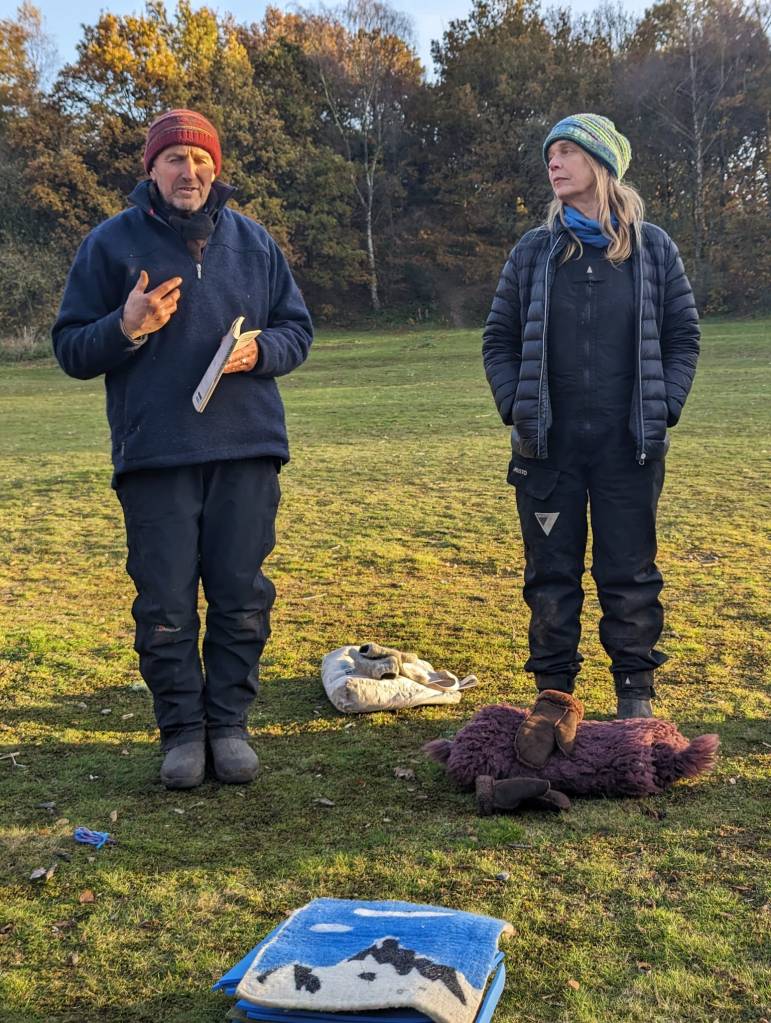
After 3 days of Reframing Behaviour training under sweet chestnut and lime, Jon came to the oak nuttery of Kaliwoods for a further two days with the Kinda facilitators tribe.
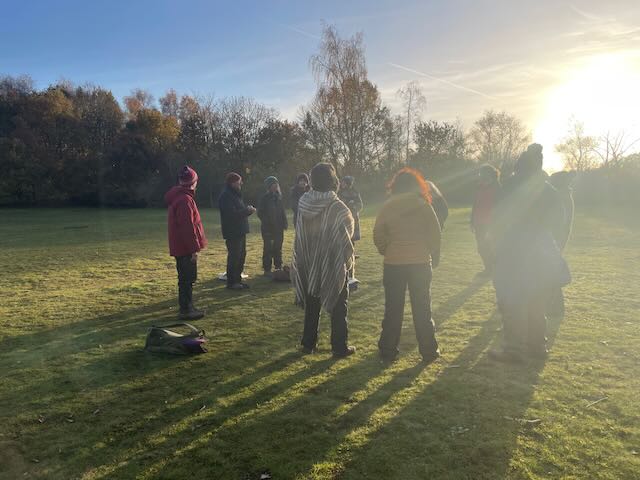
We played wide games, delved into our role as adults role in the Ludic cycle, we listened the earth and we shared why we all work together at Kinda. Thank you Jon Cree for holding space for us.
A Camels foot, Megs Bladder, and the kidneys of a polar bear.
But it was a deer in the woods which informed the day. Found while Jon was looking for some good coppice. A poem about a deer by Mary Oliver began
We played out the rutting season. With teams of 7 with one a stag, who would convert to other stags with ‘I see you Doe Gina’. That warmed us up.
William Glassers 5 needs – fingers on a hand. Connected to Maslow who first inverted his famous triangle
- First finger – Power – over our own lives
- Second finger – Fuck off – freedom
- Little finger – Play
- Thumb – physical dexterity and skill, tool work
- Ring finger – Love and compassion and belonging
In silence we thought back to our own play as a child, then shared it with a partner beside us. E’s play was a mix of risk, fear and joy, as she was dragged fro her cot by her older sister to ‘come out and play’. She made it, and together they made camps between their beds.My play was 3 fold: first my joy of dressing up becoming different characters and putting on a performance in front of the Elders – who sometimes laughed – what joy! My made up characters of Ompum, Assum and Peter with their homes along the journeys we made. The last was playing doctors and nurses at my first school and being accepted by others in this role play.
Tag/ catch/ – classic survival
Vicarious play – watching others
Rough and tumble –
Getting Lost


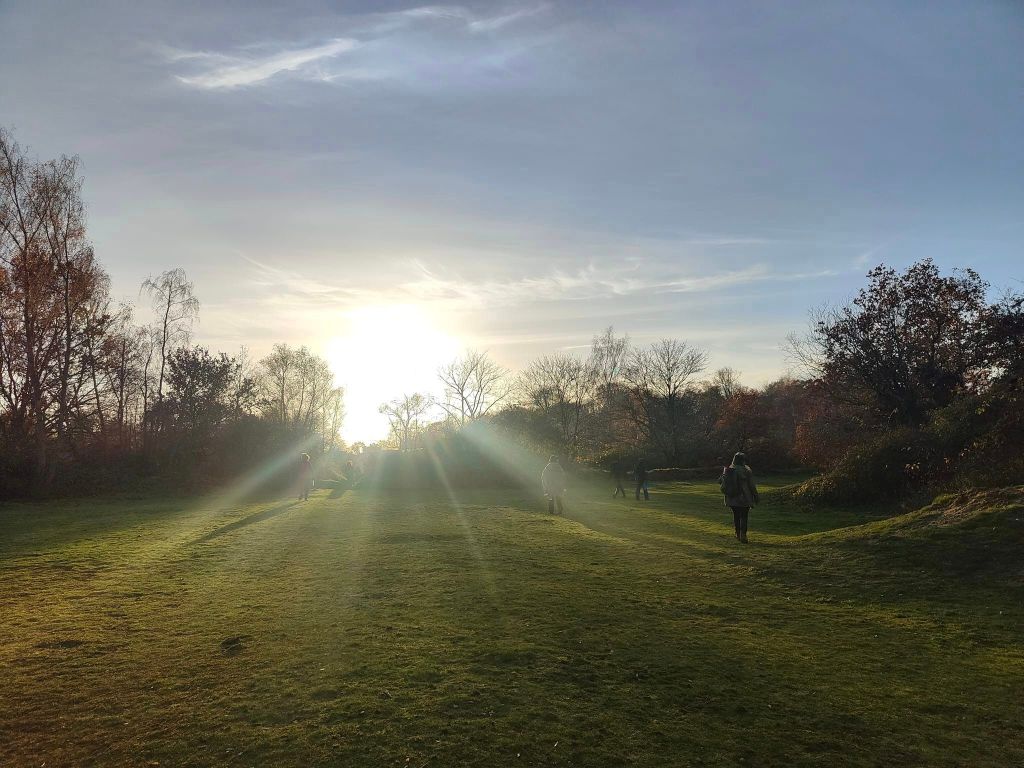
After lunch, we ventured down to Holton Pits, where we found our place in silence and contemplated this question: What is Kinda to me? What do i give to Kinda?



Sunday – Making Ladders
Tell me the story!


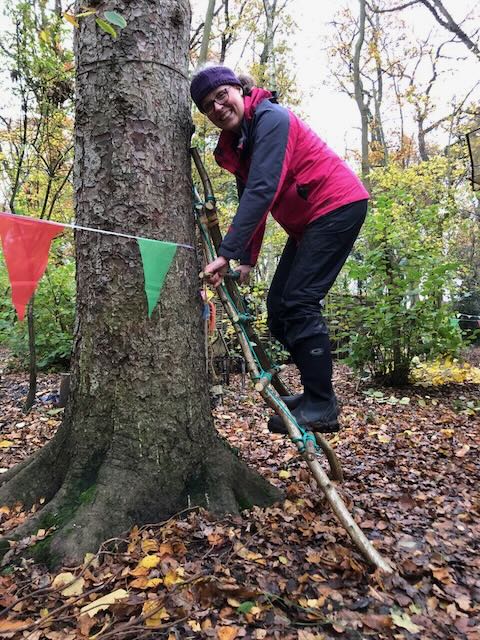


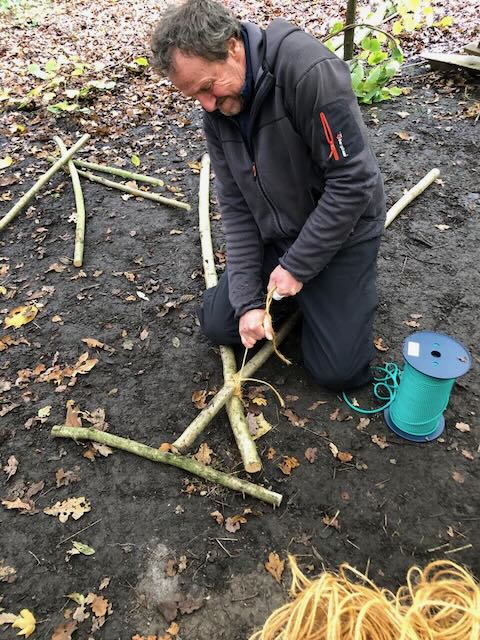


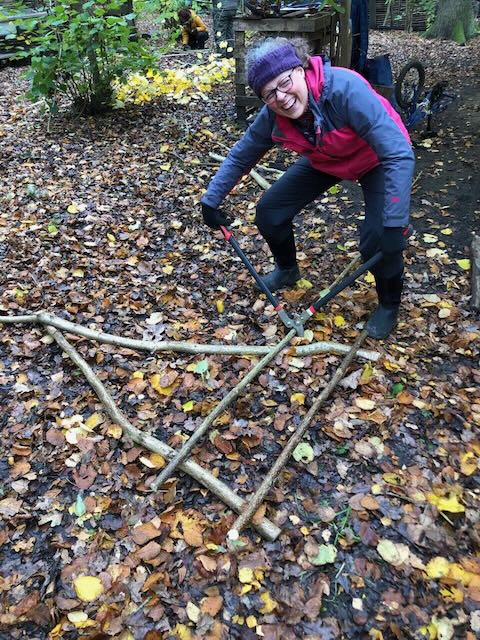
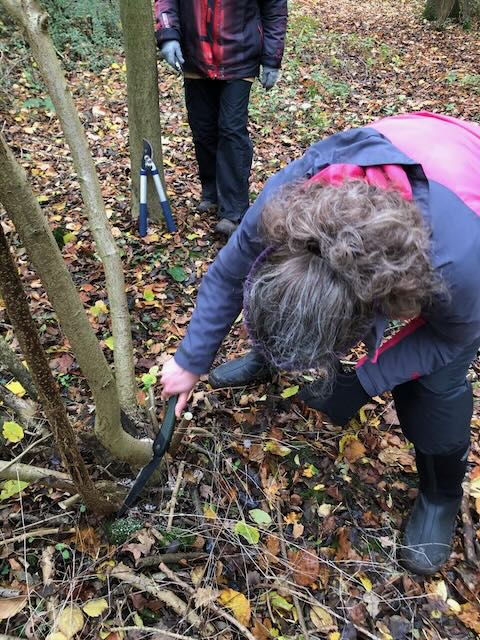

 Kinda Elders in the woods