
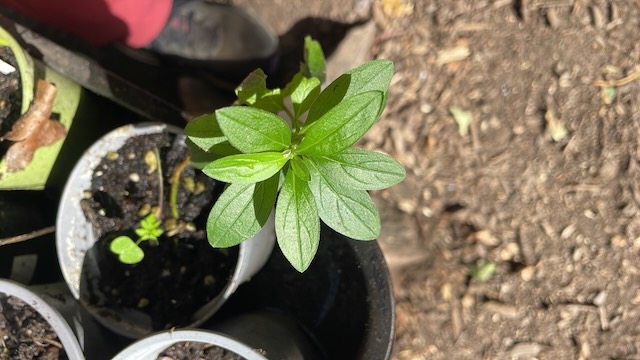
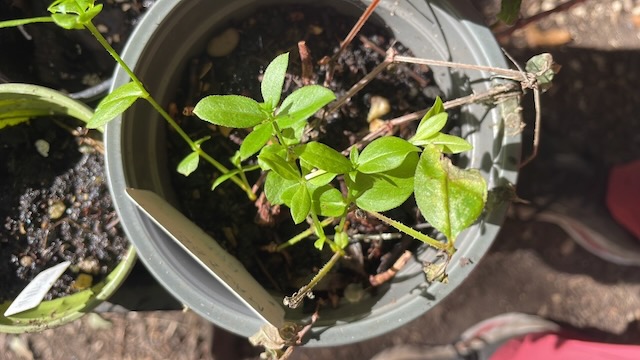
An unexpected twist in the day, as we explored the materials that make string or cord in that ancient way, the dual fibers of FLAX and HEMP, that once made our material world from our underwear to our ship masts and ropes.
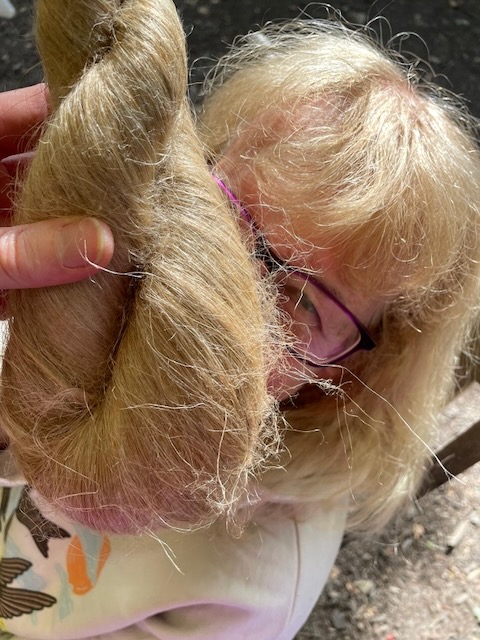
It grew out of our first story, delivered by Kally, the story of Christianne Suefferlin – Berta’s Flax. The story is here (along with the history of these fibers). The way the flax was stored in the marriage trousseaux, twisted into a practical plat, made us think it was like hair. Flaxen haired, as Emily observed, and Heather’s hair is indeed the colour of flax.
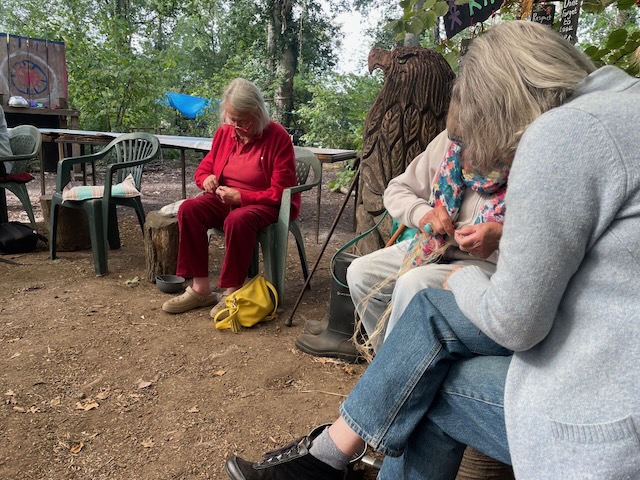
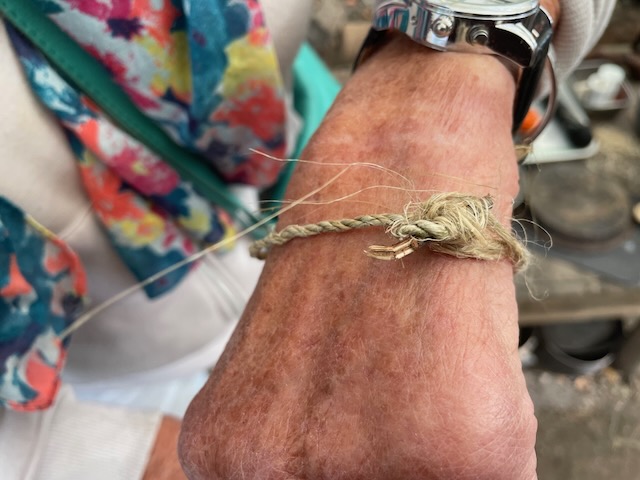
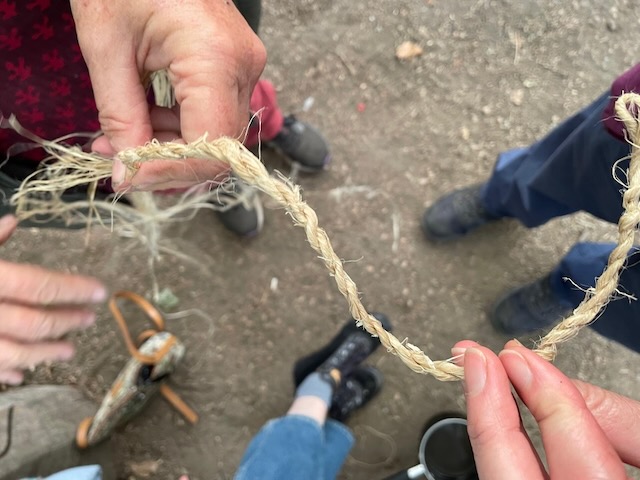
So it was we took some fibers of flax or hemp and twisted them into a cord. Some double twisted and one made a clip with a piece of wood. Here is Gill, explaining how to twist:
And as we twisted stories naturally came to mind. Rumpelstiltskin a famous German fairy tale about a man who helped a millers daughter turn straw to gold. It dawned on us that Rapunzel’s hair was most probably fake and made of flax which is strong enough to hold the weight of a prince.
We loved the word associated with fibers and weaving: Tow (historically referred either to the act of pulling or separately to raw flax/hemp fibers used in spinning), the shiv (the white matter in the heart of the hemp plant, now used by architects for insulation), Strike (is a small, bundled handful of flax fibers that have been cleaned, scutched (beaten), and are ready to be hackled (combed) or spun into linen yarn. Has this been a good yarn?
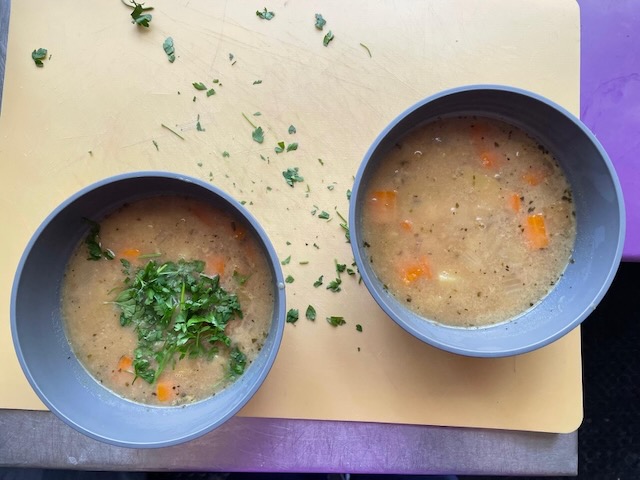
Kally cooked us delicious Austrian soup and served Apple Strudel in celebration of Christianne. An idea emerged of asking Kitty and Claire to come and talk to us of Hemp.
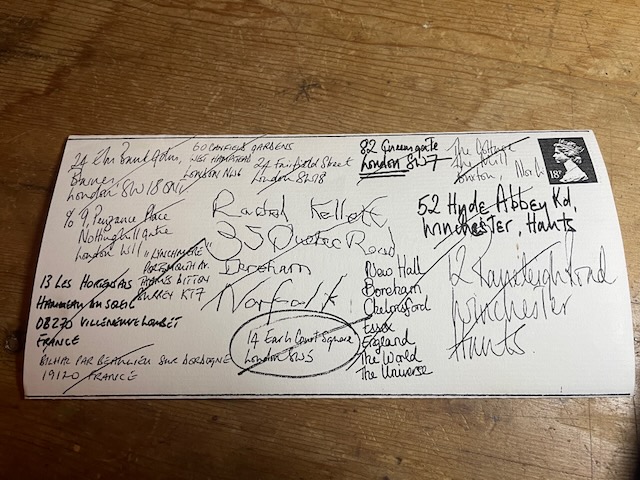
Home work: consider and begin the story of all the addresses you have lived in. Here’s a sample of Rachel’s change of address – and this is only from when she was 20!